
Compare Workflow Routes
The same parts do not imply the same procedure. A feature, a sprint, a decision and a release can all involve review, yet their callers, records and stopping points differ. Start with the result you need, then trace the handoff that produces it. Do not run every command in a diagram as a checklist.
The feature example follows attended work through its task loop to an open PR. These maps extend that visual language to six source-traced routes. Each route has an ordered reading view and full three-row SVG generated from the same model. Choose Read the procedure for the operating instructions or Trace the route to open its first chapter. The two initialization maps live together in the repository-initialization chooser. The reading view retains the conditions and source links that a compact image cannot fit.
Choose by the result, not the inventory
Section titled “Choose by the result, not the inventory”A distinct operating route
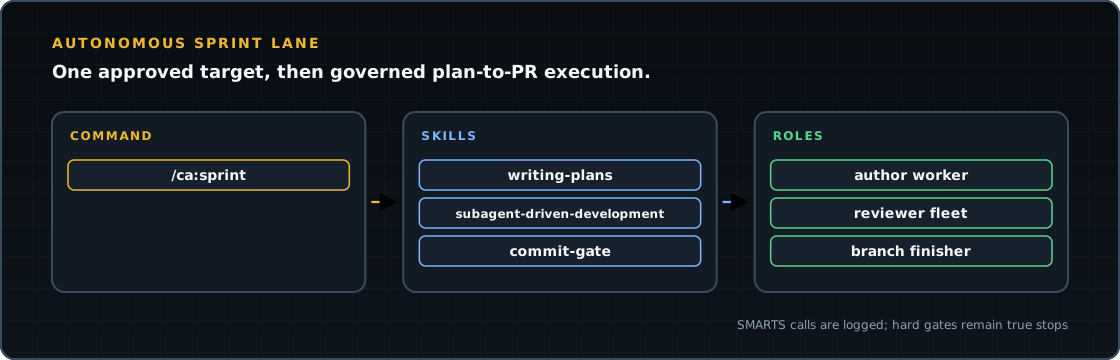
An approved sprint reaches a PR
Review the pair → execute within scope → inspect the PR
Actual endpointOpen PR; merge is a separate decision.
A distinct operating route
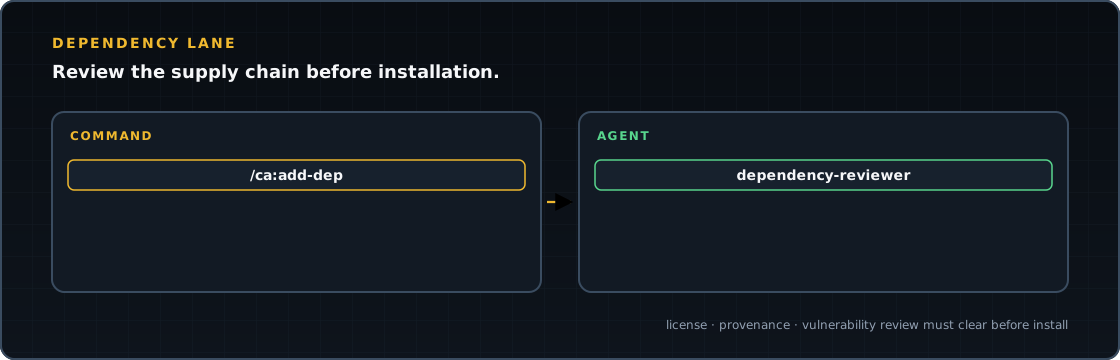
Review before adopting a dependency
Select the package → review → confirm → inspect the change
Actual endpointReviewed adoption; deliver manifest and lockfile together.
A distinct operating route
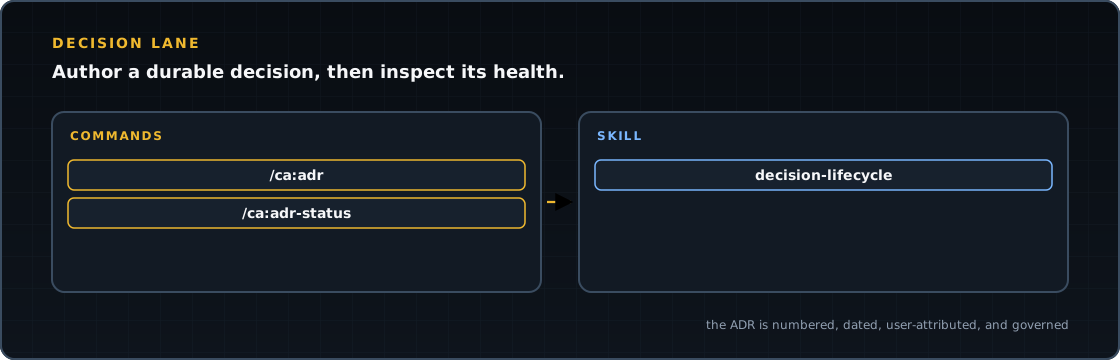
Record a decision and bind its acceptance
Attributed decision → proposed record → accepted/planned binding
Actual endpointAccepted/Planned record; delivery proof remains separate.
A distinct operating route
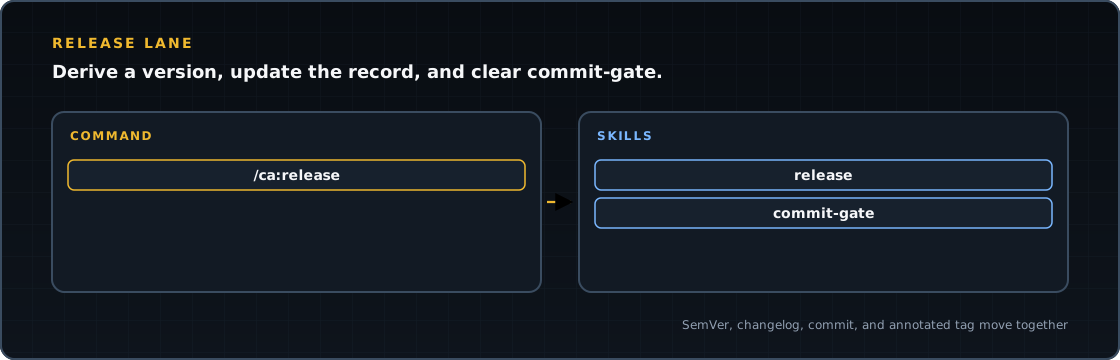
Prepare a release through a reviewed PR
Declare → derive → merge the release PR → publish
Actual endpointPublished identity; declared receipt closeout is a separate PR.
Initialization alternative
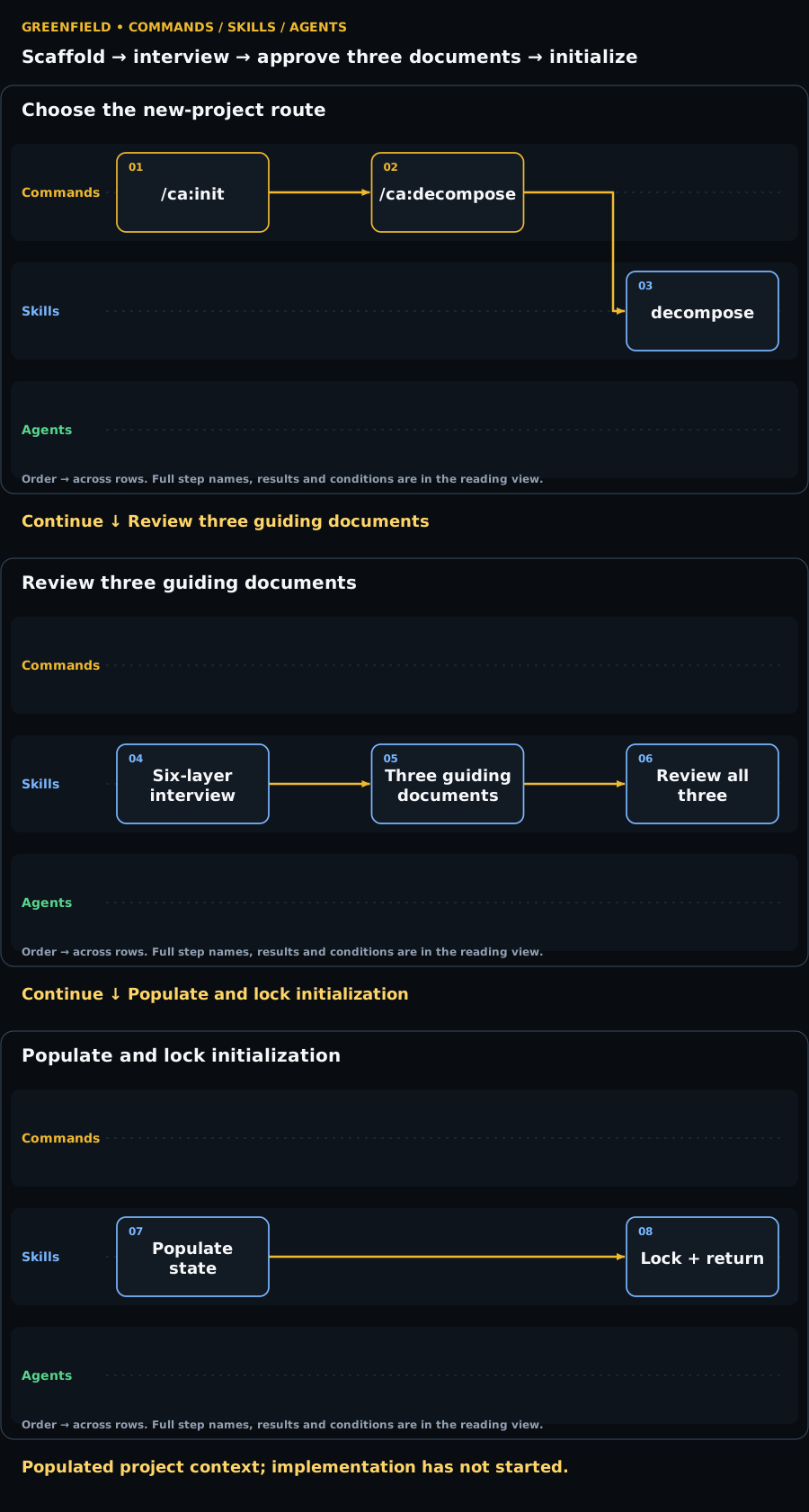
Initialize a new project from intent
Scaffold → interview → approve three documents → initialize
Actual endpointPopulated project context; implementation has not started.
Initialization alternative
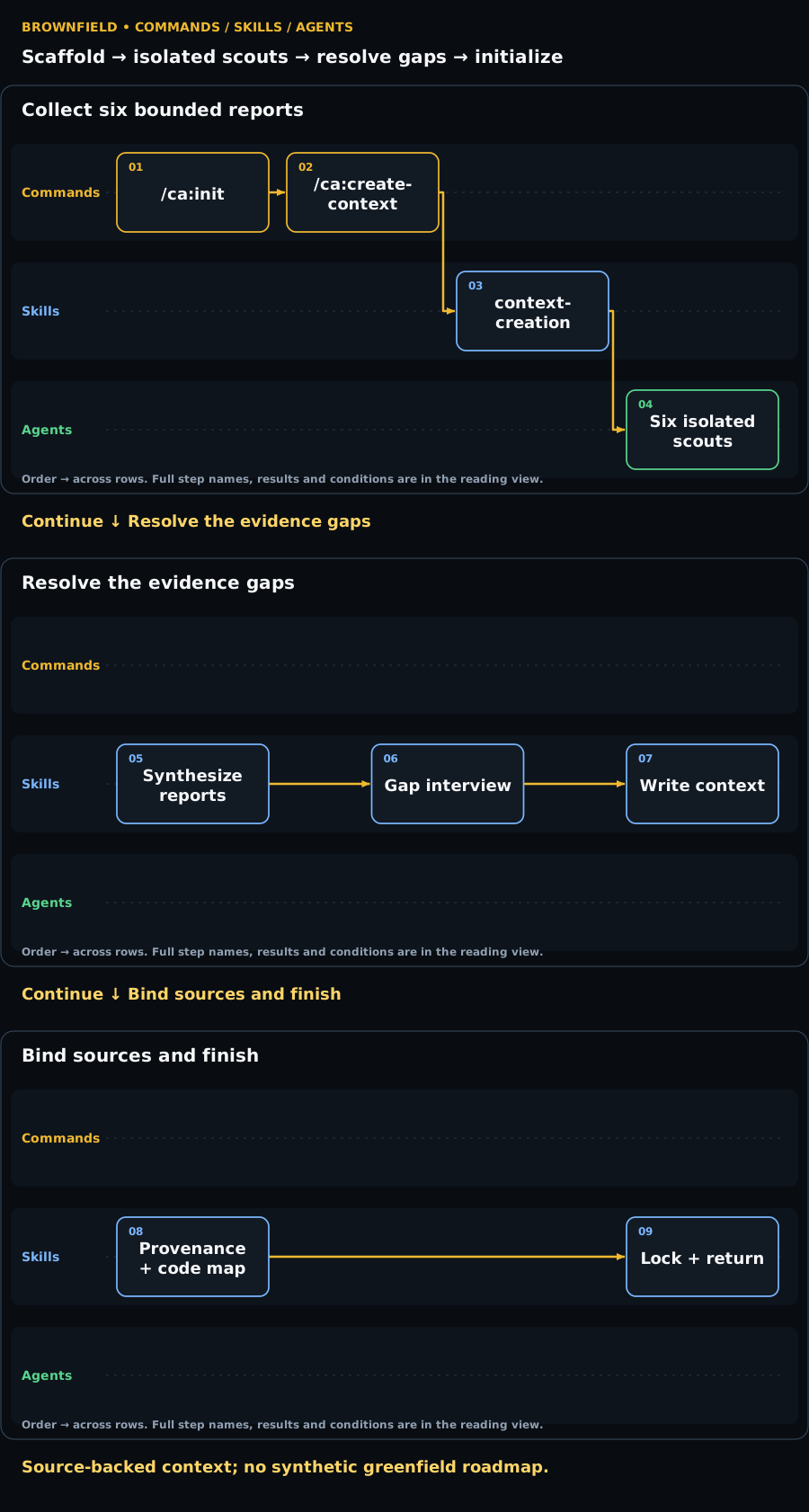
Initialize existing code from evidence
Scaffold → isolated scouts → resolve gaps → initialize
Actual endpointSource-backed context; no synthetic greenfield roadmap.
Keep your place in a route
Section titled “Keep your place in a route”The chapter chooser gives the overview. Next chapter and Previous chapter let you continue without scrolling back through the explanation. Link to this chapter gives that chapter an ordinary browser address. Following it reveals the requested chapter and opens its enclosing disclosures, including the appropriate initialization alternative. Keyboard focus follows an explicit chapter link into the requested chapter, so you can continue from that point instead of returning to a control that is now hidden.
Chapter buttons only change the reading view. Explicit chapter links change the address fragment, so browser Back can return to the earlier linked chapter. No bookmark or progress record is saved. Without JavaScript every chapter remains in the document; open its native disclosure to read it. Printing includes the full path, not only the selected chapter. Reaching the end of the diagram means you have read the route, not performed or approved the work.
Read the arrows, not only the rows
Section titled “Read the arrows, not only the rows”Commands are entries or caller-owned procedures. Skills own procedural work. Agents perform bounded roles. Those are three participant types, not three consecutive phases. Read the numbered steps left to right in a chapter, then continue to the next chapter. A handoff can cross rows and return to its caller. The horizontal dotted row is a visual guide, not an executable connection among every item on that row.
A dashed reuse arrow means the current caller performs an existing procedure without invoking its entry again. Conditional reviewers participate only when their source contract selects them. The return notes preserve task repetition, correction and user decisions. An empty role row is intentional when the owning route names no participant of that type. It is better to show the absence than invent an agent to make a diagram look balanced.
The common arrowhead is centered on its final straight segment. It marks a directed handoff, not completion, success or approval. None of the diagram controls runs a command or records a workflow transition. On narrow screens, use the complete text path rather than shrinking the full image until its labels become unreadable.
Boundaries that change the route
Section titled “Boundaries that change the route”A sprint is not an attended feature with fewer pauses. Its initial HTML pair can use one qualified, host-observed pair transaction. Its approved plan goes directly to the task engine without the attended batch coordinator. Security, authority and other named hard gates still stop; autonomy ends at the PR, not a merge. Existing Markdown and later single-artifact changes retain their own contracts.
Dependency review is not installation permission. The command sends adoption review directly to its reviewer, gets the verdict back, and then asks for the exact installation confirmation. One-time tool inspection has separate eligibility conditions; it does not silently become a project dependency. Neither route is execution isolation or an unconditional safety guarantee.
Acceptance is not delivery. An ADR begins Proposed. Explicit acceptance, reviewed obligations, committed content and a subsequent acceptance binding establish a narrower claim than current implementation or verification. Status inspection and optional challenge are separate operations.
A release has a mandatory PR boundary. The interactive preparation commits release surfaces, reports asset names and the declared publisher, opens the release PR and stops. Only a qualifying hosted publisher at the exact merged and verified default-branch commit can compose the tag. Publication still needs its applicable one-cohort authority, and any declared provenance closeout uses a separate receipt PR. A dry run neither executes that sequence nor proves its checks passed.
Initialization has alternatives, not a longer universal chain. Greenfield work interviews you, produces the three architecture/planning documents, obtains their approval and populates context. Brownfield work requires six isolated scout reports, synthesizes source evidence, resolves or defers gaps, and binds the derived context to its sources. Neither should be drawn as completed implementation, and brownfield does not retroactively invent the greenfield roadmap.
Use the map to inspect a real handoff
Section titled “Use the map to inspect a real handoff”Name the selected route, the current artifact or source identity, the caller and its next action. Ask what comes back and which condition permits continuation. A stopped step needs its own missing fact, decision or fresh evidence; a later green status does not replace it.
These diagrams are current-source explanations, not recorded executions or certifications of an installed release. Each map names its reviewed commit and owning sources. Consult the installed-host authority boundary before relying on typed behavior. Keep an unknown capability visible rather than substituting a different format or inventing a receipt.
For the ordinary commit/PR handoff, use Review and ship. For interrupted state, use Resume and recover. For the difference between accepted, implemented and verified decisions, read ADRs and their evidence. The existing Concept Map remains the starting point for the connected product model.